
Best Canon lens for sports photography for RF mirrorless cameras
Start with the original RF70-200mm f/2.8 for nearby action. Longer zooms and fixed primes solve different framing problems, not every sport at once.
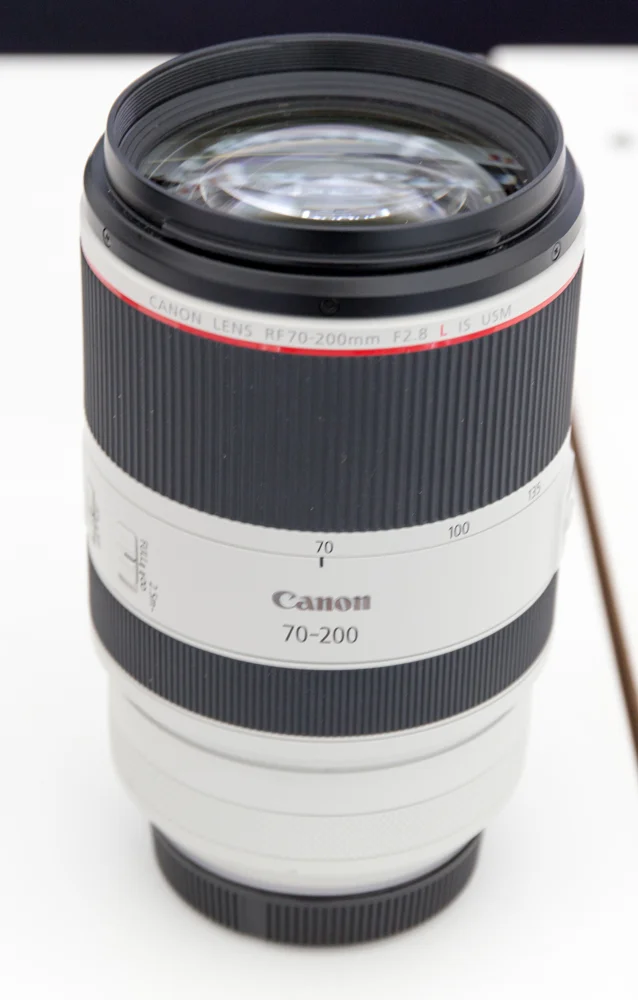

For Canon RF mirrorless sports, start with the Canon RF70-200mm F2.8 L IS USM when you can get near the action. Move to the Canon RF100-300mm F2.8 L IS USM when you need more reach without giving up f/2.8. The RF100-400mm and RF100-500mm are daylight reach choices, not dim-gym substitutes. This is an RF-only shortlist, not a recommendation for Canon EF DSLRs or EOS M.
Choose for your position, not just the sport. Beside a court, you need room for athletes moving toward you. From a distant stand, reach matters more. A wider aperture, shown by a smaller f-number, lets in more light. A long fixed-focal-length lens cannot zoom out when the play comes close, so plan support, transport and a shorter view before buying a specialist prime.
These recommendations draw on manufacturer specifications and independent reviews. The framing advice is editorial; sources are collected at the end.
We may earn a commission from qualifying purchases through the Amazon.com links. They open exact-model searches, not verified listings. Check the model, RF mount, generation, condition, accessories, seller authorization, price, regional warranty and delivery date before ordering. Availability and worldwide shipping are unverified, and Amazon.com may not deliver to your country.
Choosing the camera too? Use the sports camera guide for that separate decision, then check the exact Canon body’s lens and burst compatibility. If your work also includes athlete portraits, the Canon portrait lens guide addresses that job; a portrait recommendation is not proof of sports autofocus performance.
Compare the seven picks
| Exact product and affiliate search | Native mount and coverage | Focal length | Maximum aperture | Best-fit job |
|---|---|---|---|---|
| Canon RF70-200mm F2.8 L IS USM | Canon RF, full frame | 70-200mm | f/2.8 constant | Nearby action starting point |
| Canon RF135mm F1.8 L IS USM | Canon RF, full frame | 135mm | f/1.8 | Fixed framing in limited light |
| Canon RF100-300mm F2.8 L IS USM | Canon RF, full frame | 100-300mm | f/2.8 constant | Longer action zoom at f/2.8 |
| Canon RF400mm F2.8 L IS USM | Canon RF, full frame | 400mm | f/2.8 | Distant action at fixed 400mm |
| Canon RF100-500mm F4.5-7.1 L IS USM | Canon RF, full frame | 100-500mm | f/4.5-7.1 | Daylight zoom with 500mm reach |
| Canon RF100-400mm F5.6-8 IS USM | Canon RF, full frame | 100-400mm | f/5.6-8 | Daylight 400mm zoom compromise |
| Canon RF600mm F4 L IS USM | Canon RF, full frame | 600mm | f/4 | Distant-field specialist prime |
Check your mount and sensor first
Canon RF lenses cover full frame and give a narrower view on RF APS-C. They do not fit EF DSLRs or EOS M. EF-to-RF adapters do not work in reverse.
No adapted use or teleconverter combination is verified. Physical focal length and f-number do not become sensor-equivalent values. Native fit is not an exhaustive body or firmware approval.
Which lens fits your job?
1. Canon RF70-200mm F2.8 L IS USM
Pick the 70-200mm for nearby action when its range lets you fill the frame. You can zoom out as athletes approach, and the maximum aperture stays at f/2.8 throughout the range.
The limit is distance. At 200mm, a player across a large field may still be too small in the picture. It also lets in less light than an f/1.8 prime. Check that you are buying the original non-Z RF version; a similar listing title can hide a different generation.
2. Canon RF135mm F1.8 L IS USM
Product photo loads from Amazon when available.
Choose the 135mm f/1.8 for limited light when your position and the athlete’s movement are predictable. Its wider aperture is useful only if the fixed view fits the action.
You need more working distance than with a 50mm or 85mm, especially on APS-C. There is no zoom ring to widen the frame when a player comes toward you. Check that constraint before choosing it over the 70-200mm.
3. Canon RF100-300mm F2.8 L IS USM
Product photo loads from Amazon when available.
The 100-300mm makes sense if 200mm is consistently too short and you still need f/2.8. It extends the zoom range to 300mm without reducing the maximum aperture.
Digital Camera World describes it as over 2.5kg. Work out how you will carry and support it for a full afternoon before buying. Its 100mm wide end can also be too tight when action happens nearby.
4. Canon RF400mm F2.8 L IS USM
Product photo loads from Amazon when available.
Choose the 400mm f/2.8 for distant action that fits a fixed 400mm view. It combines that reach with f/2.8, but it cannot zoom out as play moves toward the sideline. Plan a shorter lens or another way to cover close action.
The Digital Picture also lists no control ring. If you use that ring to adjust a camera setting on other RF lenses, account for the change in handling.
5. Canon RF100-500mm F4.5-7.1 L IS USM
Product photo loads from Amazon when available.
For a daylight field, the 100-500mm gives you room to follow changing distance and reach beyond the f/2.8 zooms here.
At 500mm, its maximum aperture is f/7.1. That limits your exposure choices in low light, so do not buy it as a dim-gym substitute. Cameralabs also notes that the aperture does not give the shallowest depth of field, the zone that appears sharp around your subject.
6. Canon RF100-400mm F5.6-8 IS USM
Product photo loads from Amazon when available.
Consider the 100-400mm for daylight action when 400mm is enough. You keep zoom flexibility, but the maximum aperture falls to f/8 at the long end.
Digital Camera World reports no weather seals, which matters on an exposed sideline. Check today’s retailer price too; a reputation as a budget choice does not establish its current cost.
7. Canon RF600mm F4 L IS USM
Product photo loads from Amazon when available.
The 600mm f/4 is for a specific distant-field assignment where subjects stay far away and you have room to track them. Its f/4 aperture gives you another exposure option, but fixed 600mm framing cannot replace the flexibility of a 100-500mm zoom.
For a few events a year, consider renting. Digital Camera World suggests that may be more viable for non-professionals than buying this specialist prime.
Buying criteria
Establish your normal shooting position
A lens that works beside a school court may not work from a distant spectator stand. Ask where photography is permitted and whether you can move during the event. Compare the frame you get at 200mm with the frame you need. The 100-300mm, 400mm and 600mm address different gaps, rather than forming a ladder where the longer lens is always better.
Divide limited-light and daylight choices
The 70-200mm and 100-300mm retain f/2.8 throughout their zoom ranges. The 135mm opens to f/1.8 but gives up zooming. The 100-500mm and 100-400mm reach farther at smaller maximum apertures. For moving subjects, that aperture difference affects your shutter-speed and ISO choices. ISO controls how brightly the camera records the exposure. Stabilization compensates for camera shake, not an athlete’s movement; you still need a suitable shutter speed.
Account for approaching action
Fixed 400mm and 600mm framing can work when the action stays distant. It becomes difficult when the decisive moment happens nearby. Think through whether you need a second body, a different position or a shorter lens. Those are workflow choices, not claims that any of the long primes can zoom or accept every teleconverter.
Check RF generation and body behavior
All seven are full-frame-covering RF lenses. RF APS-C bodies narrow the view, which may help distant framing but hurt nearby court coverage. EF DSLRs and EOS M are excluded. The original RF70-200mm is not the Z version. Confirm exact model, firmware requirements and body-specific autofocus or burst limitations before ordering. No converter combination is approved here.
Frequently asked questions
Will these fit my Canon DSLR?
No native fit is recommended. These are RF mirrorless lenses, not EF or EF-S lenses. An EF-to-RF adapter does not make an RF lens fit an EF DSLR. EOS M is also outside the supported scope of this shortlist.
Which choice is sensible for a dim gym?
Begin with the 70-200mm f/2.8 if its framing fits. The 135mm f/1.8 is an alternative for a predictable position. Check actual light and camera behavior. The smaller-aperture 100-400mm and 100-500mm should not be presented as equivalent low-light options.
Is the longest lens best for football?
Not necessarily. Access, field position and how close the play gets matter. A fixed 600mm can be useful for distant action and too tight nearby. A zoom can solve changing distance better even when its maximum focal length is shorter.
Can I assume weather sealing and converter support?
No. Digital Camera World’s RF100-400mm review reports no weather seals. Check each lens’s manufacturer information for converter compatibility and focal-range restrictions. An L designation or a similar-looking lens does not settle those questions.
Sources and specifications
- Canon RF70-200mm F2.8 L IS USM: Canon specifications, Cameralabs review.
- Canon RF135mm F1.8 L IS USM: Canon specifications, The Digital Picture review.
- Canon RF100-300mm F2.8 L IS USM: Canon specifications, Digital Camera World review.
- Canon RF400mm F2.8 L IS USM: Canon specifications, The Digital Picture review.
- Canon RF100-500mm F4.5-7.1 L IS USM: Canon specifications, Cameralabs review.
- Canon RF100-400mm F5.6-8 IS USM: Canon specifications, Digital Camera World review.
- Canon RF600mm F4 L IS USM: Canon specifications, Digital Camera World review.
Related guides
Best lens for wildlife photography
Compare seven Canon RF, Sony E and Nikon Z wildlife lenses by subject distance, daylight aperture, carrying demands and sourced drawbacks. Mounts are separate choices.
Best lens for wedding photography
Compare seven Canon RF, Nikon Z and Sony E wedding lenses for general coverage, distant ceremonies and environmental portraits.
Best lens for macro photography
Compare seven native-mount macro lenses reaching at least 1:1, with sensor coverage, stabilization caveats and body-specific focus-stacking limits.