
Best lens for street photography
Start with your camera's native mount. Then choose a broader view for people and surroundings or a more selective view for gestures and details.
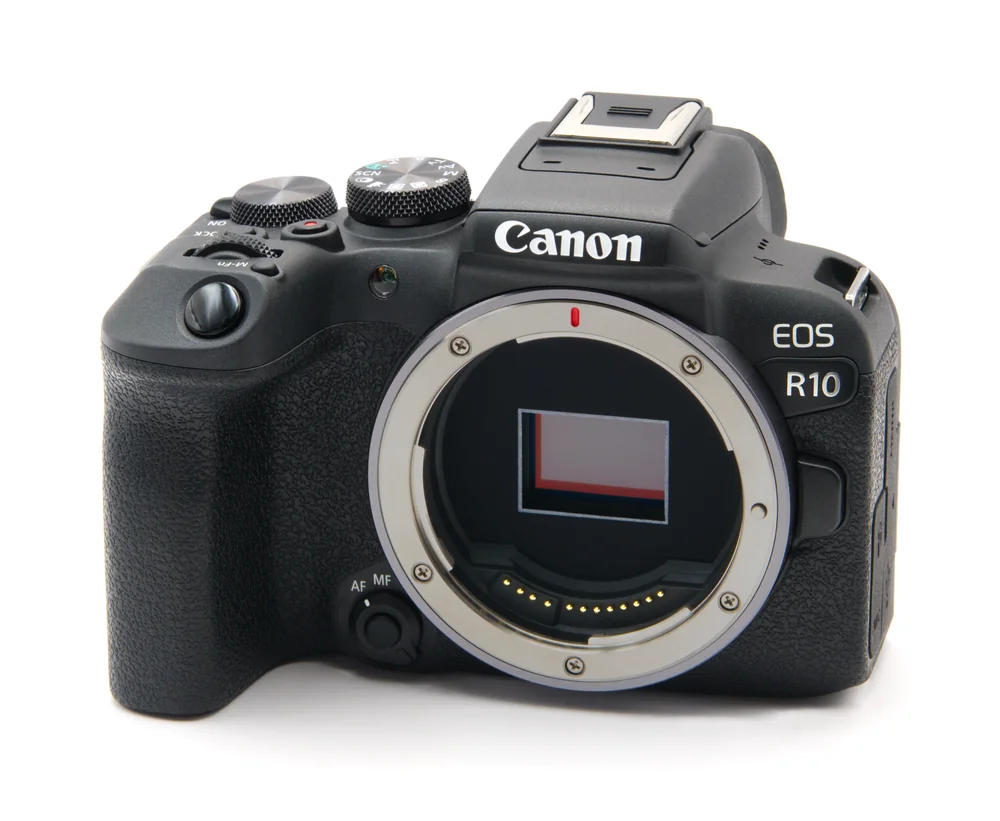
Start with the Canon RF28mm F2.8 STM if you use an RF camera and want people with their surroundings. Choose the RF35mm F1.8 Macro IS STM for a tighter view and a wider aperture. Nikon Z owners have a similar decision between 26mm and 40mm; Sony E owners have the FE40mm here. On Fujifilm X, compare the XF23mm with the XF35mm using your APS-C camera’s view, rather than treating their numbers as full-frame framing.
All seven are primes, lenses with a fixed focal length. A broader view can include a storefront and sidewalk; a tighter one can isolate a gesture with less clutter. You cannot zoom when the scene changes, so choose for the distance at which you usually photograph people.
These recommendations draw on manufacturer specifications and independent reviews. Framing advice is editorial, and sources are collected at the end.
We may earn a commission from qualifying purchases through the Amazon.com links. They open exact-model searches, not verified listings. Before ordering, check the model, mount, generation, condition, accessories, seller authorization, price, regional warranty and delivery date. Stock and worldwide shipping are unverified.
If you have not chosen a body, the street camera guide separates fixed-lens cameras from interchangeable-lens systems. A fixed-lens camera cannot accept these primes.
Compare the seven picks
| Exact product and affiliate search | Native mount and coverage | Focal length | Maximum aperture | Best-fit job |
|---|---|---|---|---|
| Canon RF28mm F2.8 STM | Canon RF, full frame | 28mm | f/2.8 | Broader Canon street scenes |
| Canon RF35mm F1.8 Macro IS STM | Canon RF, full frame | 35mm | f/1.8 | Wider-aperture Canon option |
| Nikon NIKKOR Z 26mm f/2.8 | Nikon Z, full frame FX | 26mm | f/2.8 | Broader Nikon view |
| Nikon NIKKOR Z 40mm f/2 | Nikon Z, full frame FX | 40mm | f/2 | More selective Nikon view |
| Sony FE 40mm F2.5 G SEL40F25G | Sony E, full frame FE | 40mm | f/2.5 | Sony normal-view prime |
| Fujifilm FUJINON XF23mm F2 R WR | Fujifilm X, APS-C | 23mm | f/2 | Broader Fujifilm APS-C view |
| Fujifilm FUJINON XF35mm F2 R WR | Fujifilm X, APS-C | 35mm | f/2 | More selective Fujifilm APS-C view |
Check your mount and sensor first
Canon RF lenses cover full frame and give a narrower view on RF APS-C. They do not fit EF DSLRs or EOS M. EF-to-RF adapters do not work in reverse.
Nikon Z lenses cover FX and give a narrower view on Z DX. They are not F DSLR lenses. FTZ does not adapt Z lenses to F bodies.
The Sony lens covers FE full frame and gives a narrower view on E APS-C. Sony A-mount is excluded. Fujifilm XF entries cover X APS-C only, not GFX or X100-series fixed-lens cameras. Match the exact XF model, not a similarly named XC or f/1.4 model.
No adapted use or teleconverter combination is verified. Physical focal length and f-number do not become sensor-equivalent values. Native fit is not an exhaustive body or firmware approval. Autofocus, stabilization and any focus-bracketing or stacking support require exact-body checks.
Which lens fits your job?
1. Canon RF28mm F2.8 STM
Product photo loads from Amazon when available.
Choose the 28mm for broader scenes on a full-frame RF camera. It leaves more room for surroundings than the 35mm, although it is not an ultra-wide lens for cramped interiors.
Its f/2.8 maximum aperture lets in less light than the RF35mm’s f/1.8. On an RF APS-C body, check the narrower view before buying it for broad street compositions.
2. Canon RF35mm F1.8 Macro IS STM
Product photo loads from Amazon when available.
The RF35mm gives you a tighter full-frame view than the 28mm, with f/1.8 available when light is limited. Its 0.5x maximum magnification also lets you photograph details at half life-size on the sensor. That is useful close-up capability, but it is not true 1:1 macro.
Cameralabs notes a shorter close-focus distance than the RF85mm F2. Leave room for light when working close. Focus distance is not the gap between the front of the lens and your subject.
3. Nikon NIKKOR Z 26mm f/2.8
Product photo loads from Amazon when available.
Choose the Z26mm for broader scenes on a Nikon FX full-frame body. The view is the reason to buy it, but focus behavior deserves attention if you photograph unpredictable movement.
Amateur Photographer reports noisy, slow focusing. The review also says you need the hood to use filters, so include that in your carrying setup.
4. Nikon NIKKOR Z 40mm f/2
Product photo loads from Amazon when available.
The standard Z40mm f/2 suits a person or detail with less surrounding space than the 26mm includes. Match the standard version here, rather than the SE styling.
Amateur Photographer found reduced sharpness at close range, occasional autofocus failures and vignetting with the aperture wide open. Vignetting means darker corners. Those findings are worth considering if close details or fleeting gestures are your main subjects.
5. Sony FE 40mm F2.5 G SEL40F25G
Product photo loads from Amazon when available.
Choose the FE40mm if its fixed normal view suits your Sony E compositions. It covers full frame, with a narrower view on compatible APS-C bodies.
Amateur Photographer reports darker corners at wide apertures and notes that f/2.5 is not the brightest option. Those are reasons to weigh your light and preferred rendering, rather than a basis for ranking it against lenses in other mounts.
6. Fujifilm FUJINON XF23mm F2 R WR
Product photo loads from Amazon when available.
The XF23mm f/2 is the broader of these two Fujifilm street choices. Use it for everyday scenes where the XF35mm leaves too little room for surroundings.
It covers X APS-C only, and its physical 23mm focal length does not give the same view as 23mm on full frame or the Canon 28mm used on full frame. The f/2 aperture lets in less light than the XF23mm F1.4. It is not a conversion lens for an X100.
7. Fujifilm FUJINON XF35mm F2 R WR
Product photo loads from Amazon when available.
Choose the XF35mm f/2 when the XF23mm includes too much of the scene. Its more selective view on X APS-C is different from 35mm on full frame. Buy the XF model, not the similarly named XC35mm F2.
Digital Camera World notes no focus-distance scale and no option to remove the aperture ring’s clicks. Keep those handling limits in mind if you want to set focus by distance or adjust aperture smoothly for video.
Buying criteria
Pick your normal distance
Try the candidate view with a zoom if you have one. Check how much empty space or unwanted cropping remains in your photographs. A wider lens is little help if you seldom move close enough for the main subject to have presence in the frame.
Compare views on the actual sensor
The Canon, Nikon and Sony entries cover full frame in their own mounts. Compatible APS-C bodies show a narrower view. The Fujifilm entries are APS-C X lenses from the start. Physical focal length is the number on the barrel; sensor size also determines field of view.
Pay attention to focus and handling
The Nikon 26mm review reports noisy, slow focusing and a hood requirement for filters. The 40mm review reports occasional AF failures and reduced close-range sharpness. Try the exact body and lens combination where possible; those reviews do not give a failure rate for your camera or firmware.
Let aperture serve the light
A wider aperture offers an exposure choice, not a rule for every scene. Several people at different distances may call for more depth of field. Check shutter sound, weather protection and packed size separately; these recommendations do not compare them through testing. If carrying a system all day matters, the travel camera guide offers body-selection context, not a compatibility list for these lenses.
Frequently asked questions
Is 35mm the standard street choice?
It is one useful view, not a rule. On full frame it can include a person and surroundings; on APS-C the same physical focal length gives a narrower view. Choose for your distance and compositions.
Can I attach the Fujifilm lenses to an X100?
No. These XF lenses are for interchangeable-lens X bodies. X100-series cameras have fixed lenses and their own supported accessories. GFX is also excluded.
Should I always choose the fastest aperture?
No. Wider aperture helps in limited light or when you want less depth of field, but may be unnecessary for layered scenes. Framing and focus behavior can matter more.
Are these all silent focusing lenses?
Do not assume so. Amateur Photographer specifically reports noisy focusing from the Nikon 26mm. There is no comparative noise test for the other entries here, so check your intended body and lens for quiet indoor spaces or video.
Sources and specifications
- Canon RF28mm F2.8 STM: Canon specifications, OpticalLimits review.
- Canon RF35mm F1.8 Macro IS STM: Canon specifications, Cameralabs review.
- Nikon NIKKOR Z 26mm f/2.8: Nikon specifications, Amateur Photographer review.
- Nikon NIKKOR Z 40mm f/2: Nikon specifications, Amateur Photographer review.
- Sony FE 40mm F2.5 G SEL40F25G: Sony specifications, Amateur Photographer review.
- Fujifilm FUJINON XF23mm F2 R WR: Fujifilm specifications, Cameralabs review.
- Fujifilm FUJINON XF35mm F2 R WR: Fujifilm specifications, Digital Camera World review.
Related guides
Best lens for wildlife photography
Compare seven Canon RF, Sony E and Nikon Z wildlife lenses by subject distance, daylight aperture, carrying demands and sourced drawbacks. Mounts are separate choices.
Best lens for wedding photography
Compare seven Canon RF, Nikon Z and Sony E wedding lenses for general coverage, distant ceremonies and environmental portraits.
Best lens for macro photography
Compare seven native-mount macro lenses reaching at least 1:1, with sensor coverage, stabilization caveats and body-specific focus-stacking limits.