
Best lens for food photography
Match the lens to the photograph: wider table scenes, a whole plate or small details. Macro magnification and overhead clearance are different buying decisions.
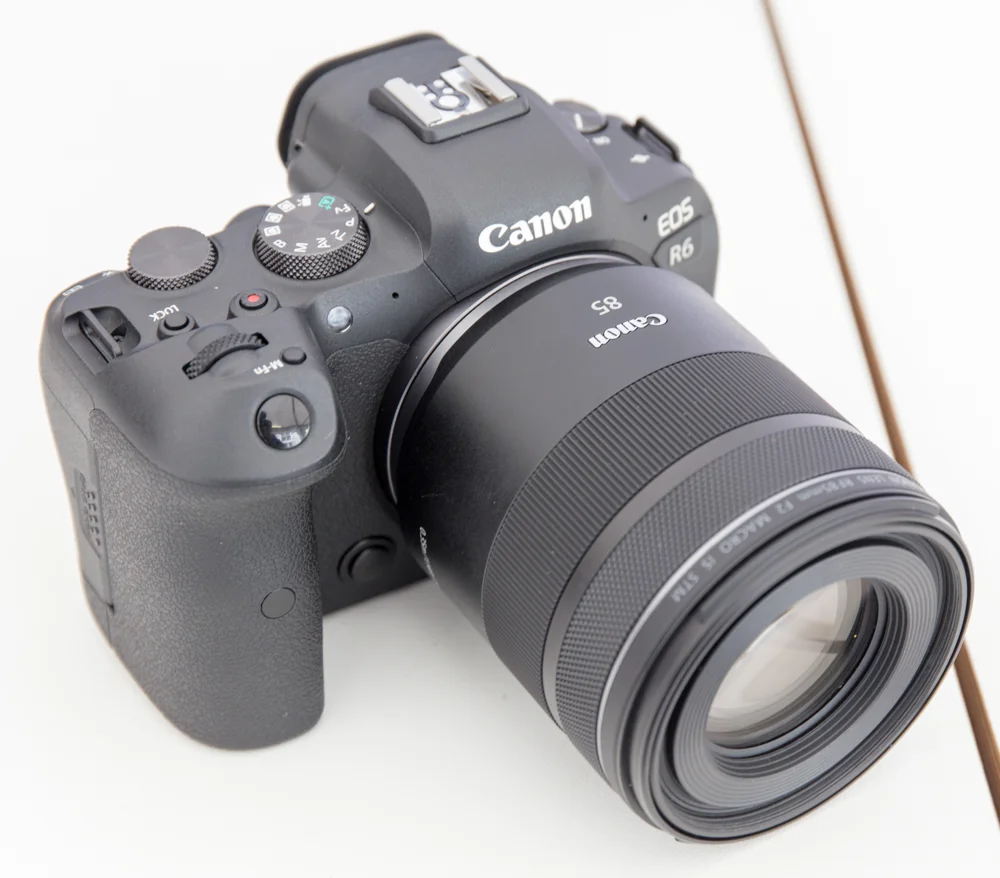

For Canon RF food photographs in a small space, start with the Canon RF35mm F1.8 Macro IS STM for wider compositions and half life-size details. Nikon Z owners who need both plated food and true macro can consider the Nikon NIKKOR Z MC 50mm f/2.8. Sony E owners seeking detail should start with the Sony FE90mm Macro or compare the Sigma 105mm Macro when tripod use is acceptable. Longer macro lenses are useful detail tools, but often awkward for overhead pictures.
Buy for the photograph you want to make. A whole table needs a wider view than a garnish or surface detail. For overhead photographs, you also need a safe camera support and enough height without blocking the light. A normal prime, a lens with a fixed focal length, can suit the composition better than a long macro lens. Only some picks here reach 1:1, where the subject’s image on the sensor is life-size.
These recommendations draw on manufacturer specifications and independent reviews. Framing advice is editorial; sources are collected at the end.
We may earn a commission from qualifying purchases through the Amazon.com links. They open exact-model searches, not verified listings. Check model, mount, generation, condition, accessories, seller authorization, price, regional warranty and delivery date before ordering. Stock and worldwide shipping are unverified, and Amazon.com may not deliver to your country.
If you are buying your first interchangeable-lens body, use the beginner camera guide before choosing a native mount. For restaurant sessions that also include people, the portrait camera guide addresses body selection separately; it is not evidence of food-photography or macro performance.
Compare the seven picks
| Exact product and affiliate search | Native mount and coverage | Focal length | Maximum aperture | Best-fit job |
|---|---|---|---|---|
| Canon RF35mm F1.8 Macro IS STM | Canon RF, full frame | 35mm | f/1.8 | Canon wider tabletop starting point |
| Canon RF85mm F2 Macro IS STM | Canon RF, full frame | 85mm | f/2 | Canon tighter plates and half-macro |
| Canon RF100mm F2.8 L Macro IS USM | Canon RF, full frame | 100mm | f/2.8 | Canon small-detail specialist |
| Nikon NIKKOR Z MC 50mm f/2.8 | Nikon Z, full frame FX | 50mm | f/2.8 | Nikon true macro with shorter framing |
| Sony FE 90mm F2.8 Macro G OSS SEL90M28G | Sony E, full frame FE | 90mm | f/2.8 | Sony E stabilized macro lane |
| Sigma 105mm F2.8 DG DN Macro Art Sony E | Sony E, full frame FE | 105mm | f/2.8 | Sony E tripod-oriented alternative |
| Nikon NIKKOR Z 50mm f/1.8 S | Nikon Z, full frame FX | 50mm | f/1.8 | Nikon wider composition prime |
Check your mount and sensor first
Canon RF lenses cover full frame and give a narrower view on RF APS-C. They do not fit EF DSLRs or EOS M. EF-to-RF adapters do not work in reverse.
Nikon Z lenses cover FX and give a narrower view on Z DX. They are not F DSLR lenses. FTZ does not adapt Z lenses to F bodies.
Sony E entries cover FE full frame and give a narrower view on E APS-C. A-mount is excluded. Sigma entries are Sony E DG DN, not L-Mount or DG HSM.
No adapted use or teleconverter combination is verified. Physical focal length and f-number do not become sensor-equivalent values. Native fit is not an exhaustive body or firmware approval.
Which lens fits your job?
1. Canon RF35mm F1.8 Macro IS STM
Product photo loads from Amazon when available.
Choose the RF35mm when the table and nearby props belong in the picture. Its wider view is useful in a small space, and its 0.5x maximum magnification adds half-life-size detail work. It does not reach true 1:1 macro.
Cameralabs notes a shorter close-focus distance than the RF85mm F2. Check the space left for lighting when you move close. Minimum focus distance is not the measured gap between the front of the lens and the food.
2. Canon RF85mm F2 Macro IS STM
The RF85mm suits tighter plate compositions when you can place the camera farther away. Its 0.5x maximum magnification gives half-life-size details, rather than the true macro capability of the RF100mm.
The longer view can make a wide overhead arrangement hard to fit beneath a low ceiling. Photo Review also notes no weather sealing, so account for that if the lens will work outside as well as at the table.
3. Canon RF100mm F2.8 L Macro IS USM
Product photo loads from Amazon when available.
Choose the RF100mm for small food details that benefit from up to 1.4x magnification, beyond life-size. For a whole table, its fixed 100mm view can be restrictive, particularly overhead in a small room. The f/2.8 aperture also lets in less light than the f/1.8 composition lenses here.
Cameralabs discusses its spherical-aberration, or SA, control, which changes how the lens renders the image. It does not replace careful focus placement or increase the shallow zone of sharp focus in close work.
4. Nikon NIKKOR Z MC 50mm f/2.8
Product photo loads from Amazon when available.
The MC50mm gives Nikon Z owners true 1:1 magnification with a shorter focal length than the 90-105mm macro options. That makes it worth considering for a mix of whole-plate compositions and details.
At a given magnification, the shorter lens can mean a closer setup than a 105mm. Check that the camera and lens leave space for lights and stands. There is no measured working-distance comparison here to replace that practical check.
5. Sony FE 90mm F2.8 Macro G OSS SEL90M28G
Product photo loads from Amazon when available.
Choose the Sony 90mm for close details and tighter plates on Sony E. It reaches 1:1, unlike the Canon half-macro options, and has optical stabilization, called OSS, to compensate for camera shake.
The fixed 90mm view is less convenient above a broad tabletop in a cramped room. OSS also cannot freeze a moving hand, rising steam or any other subject motion. Plan the exposure and support as well as the lens.
6. Sigma 105mm F2.8 DG DN Macro Art Sony E
Product photo loads from Amazon when available.
Consider the Sigma 105mm if small details are the main job and you can use a tripod. Its maximum magnification is 1:1. Buy the Sony E DG DN model, rather than a similarly named DSLR lens or another mount.
Unlike the Sony FE90mm, it has no optical stabilization. Cameralabs recommends considering a tripod for professional macro work. That is the main support decision to make before choosing this alternative.
7. Nikon NIKKOR Z 50mm f/1.8 S
Product photo loads from Amazon when available.
Choose the Z50mm f/1.8 S for plated food and restaurant context when a wider aperture matters more than true macro. It is a normal composition lens, not the MC50mm. For tiny details, choose a macro model instead.
Digital Camera World describes it as bigger and heavier than the F-mount AF-S50mm f/1.8G. If you are moving from that DSLR lens, allow for the difference in your kit.
Buying criteria
Sketch the overhead setup
Before buying a long macro lens, check the height available above the table and how you will support the camera safely. A lens that needs a narrower composition can force the camera farther away to include the whole scene. The Canon 35mm and Nikon 50mm options have clear roles for wider framing. The height you need depends on the framing and sensor size, so a single camera-to-food distance would not help every setup.
Decide how small the detail really is
The Canon 35mm and 85mm reach 0.5x magnification. The Canon 100mm reaches 1.4x; the Nikon MC50mm, Sony 90mm and Sigma 105mm reach 1x. The Nikon 50mm f/1.8 is a normal composition lens, not a true macro recommendation. Those differences matter for tiny subjects, but a whole plate may not need life-size reproduction at all.
Keep lighting clearance separate from focus distance
A manufacturer minimum focus distance is not the gap between the lens front and the food. Close setups can leave little space for a reflector, diffuser or light. Check the lens dimensions and your actual lighting layout before ordering. The shorter Nikon macro may suit the view you want while making a close-detail arrangement less convenient for illumination.
Choose support for repeatable framing
A tripod or suitable overhead support can help keep framing consistent between adjustments to the plate. Stabilization cannot hold your composition while you move props, and it cannot remove subject motion. The Sigma’s lack of optical stabilization matters more for handheld work than for a supported setup; it does not establish worse tripod image quality. Aperture choice should follow the depth of the food you need in focus, not the fastest number in the list.
Frequently asked questions
Do I need a macro lens for food?
Not always. Whole plates and wider table scenes can suit a normal prime. Macro capability matters when the subject is small enough to require close reproduction. The Nikon 50mm f/1.8 serves compositions here, while the MC50mm serves true macro as well.
Is 100mm best for overhead food pictures?
Not automatically. A longer fixed view may require more height to include the arrangement. In a small room the wider Canon 35mm or a Nikon 50mm can be easier to place. Check support and ceiling clearance before selecting a detail specialist.
Are the Canon 35mm and 85mm true macro?
They reach 0.5x, or half life-size, according to manufacturer specifications. They do not reach 1:1. That can still be useful for plated food and details, but should not be presented as the same magnification capability as the true macro entries.
Does minimum focus distance tell me lighting clearance?
No. Lens dimensions and the close-focus arrangement affect the gap between the lens front and the food. Check your practical setup; the sources here do not provide a measured lighting-clearance comparison.
Sources and specifications
- Canon RF35mm F1.8 Macro IS STM: Canon specifications, Cameralabs review.
- Canon RF85mm F2 Macro IS STM: Canon specifications, Photo Review review.
- Canon RF100mm F2.8 L Macro IS USM: Canon specifications, Cameralabs review.
- Nikon NIKKOR Z MC 50mm f/2.8: Nikon specifications, Photography Life review.
- Sony FE 90mm F2.8 Macro G OSS SEL90M28G: Sony specifications, OpticalLimits review.
- Sigma 105mm F2.8 DG DN Macro Art Sony E: Sigma specifications, Cameralabs review.
- Nikon NIKKOR Z 50mm f/1.8 S: Nikon specifications, Digital Camera World review.
Related guides
Best lens for wildlife photography
Compare seven Canon RF, Sony E and Nikon Z wildlife lenses by subject distance, daylight aperture, carrying demands and sourced drawbacks. Mounts are separate choices.
Best lens for wedding photography
Compare seven Canon RF, Nikon Z and Sony E wedding lenses for general coverage, distant ceremonies and environmental portraits.
Best lens for macro photography
Compare seven native-mount macro lenses reaching at least 1:1, with sensor coverage, stabilization caveats and body-specific focus-stacking limits.