
Best Nikon lens for portraits: seven Z-mount choices
Start with the Z 85mm f/1.8 S for individual portraits, the Z 50mm f/1.8 S for tighter rooms, or the original Z 70-200mm f/2.8 VR S for changing compositions.
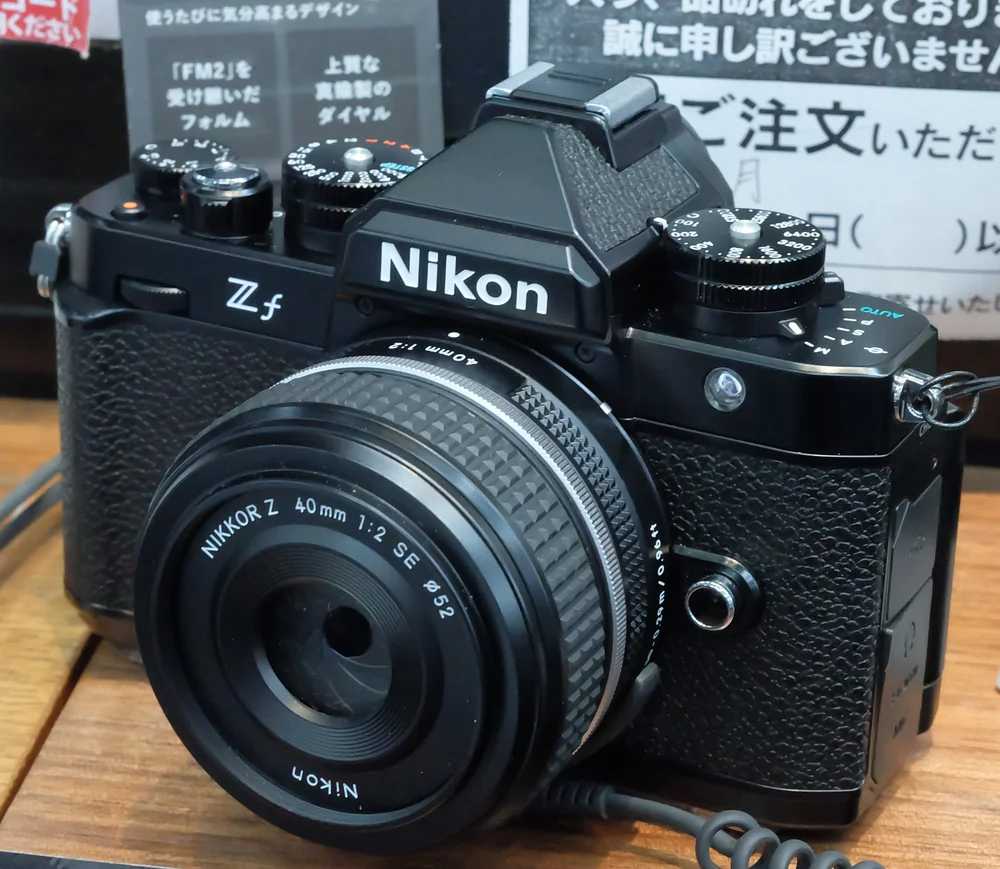

Start with the pictures you need to make
The Z 85mm f/1.8 S is the starting point for individual portraits on full frame. Choose the Z 50mm f/1.8 S for tighter rooms, or the Z 35mm f/1.8 S if the setting needs to be part of the picture. For changing tight compositions from a position you can’t leave, choose the original Z 70-200mm f/2.8 VR S.
Every lens here fits Nikon Z mirrorless cameras and covers full-frame FX. On smaller-sensor DX Z bodies, the view is narrower, so you’ll need to reconsider the available space. These lenses do not fit Nikon F DSLRs. The FTZ adapter cannot put a Z lens on an F-mount body.
Our recommendations use Nikon specifications and independent reviews. We may earn a commission from qualifying purchases through the Amazon links, which open exact-model searches. Before ordering, check the model and generation, condition, seller, accessories, warranty and delivery.
If you are choosing a body as well, the portrait camera guide addresses that decision. Compare lens roles across systems in the Canon RF portrait lens guide, but do not treat its RF lenses as compatible alternatives for a Nikon body.
Compare seven different portrait roles
A prime has a fixed focal length; a zoom changes the framing without a lens swap. Aperture is the lens opening, expressed as an f-number. A smaller number means a wider opening that lets in more light. All seven picks cover FX, but give a narrower view on DX.
| Lens | Why it belongs | Main compromise |
|---|---|---|
| Nikon NIKKOR Z 85mm f/1.8 S | Individual-portrait starting point | Fixed framing can restrict indoor work |
| Nikon NIKKOR Z 85mm f/1.2 S | Wider-aperture 85mm specialist | No OLED information display |
| Nikon NIKKOR Z 50mm f/1.8 S | Normal framing in tighter spaces | Bigger than the cited F-mount alternative |
| Nikon NIKKOR Z 135mm f/1.8 S Plena | Longer-distance individual portraits | Long fixed framing needs space |
| Nikon NIKKOR Z 70-200mm f/2.8 VR S | Changing tighter compositions | Slower aperture than the primes |
| Nikon NIKKOR Z 35mm f/1.8 S | Environmental portraits | Close tight faces are a different use |
| Nikon NIKKOR Z 50mm f/1.4 | Wider-aperture normal prime | Documented wide-open optical caveats |
Z 85mm f/1.8 S for a focused individual-portrait brief
Product photo loads from Amazon when available.
Start here for a planned individual-portrait session. Nikon specifies an 85mm focal length and f/1.8 maximum aperture. If 85mm already works in your usual locations and you don’t need f/1.2, this is the more straightforward choice.
Its fixed view is the limitation. To keep a person the same size in the frame, you’ll need more distance than with a 50mm lens, and DX tightens the view further. Amateur Photographer provides an independent assessment, but check the framing in your own room before buying.
Z 85mm f/1.2 S when the aperture changes your work
Product photo loads from Amazon when available.
Choose this over the Z 85mm f/1.8 S if you regularly need a wider lens opening. Nikon documents f/1.2, which admits more light than f/1.8. The focal length stays at 85mm, so it won’t solve a cramped-room problem.
Digital Camera World notes the lack of an OLED information display on the lens. That matters if you want that handling feature, but the fixed framing is the bigger concern for group portraits. If f/1.2 isn’t central to the pictures you make, stay with the f/1.8 option.
Z 50mm f/1.8 S for more flexible positioning in a room
Product photo loads from Amazon when available.
Choose the Z 50mm f/1.8 S when an 85mm lens crops out too much of the person or surroundings from your available space. On FX, its broader view makes it the better starting point for a small room. Nikon’s specified f/1.8 opening also admits more light than the f/2.8 zoom.
Digital Camera World reports that it’s bigger and heavier than Nikon’s F-mount AF-S50mm f/1.8G. Don’t expect the same small carrying package, and don’t confuse that F lens with this Z model. On DX, check the composition on your camera rather than expecting the full-frame view.
Z 135mm f/1.8 S Plena for a location with room
Product photo loads from Amazon when available.
The Plena belongs on your shortlist if you plan individual portraits in locations with space to stand back. Nikon specifies 135mm and f/1.8. That longer focal length requires more distance than 85mm for comparable framing.
It is a poor default if your locations are often small rooms or you need to switch quickly to groups. Photography Life provides an independent review. Before buying, try 135mm on an existing zoom if you have one and check whether you can work comfortably at that distance.
Original Z 70-200mm f/2.8 VR S for changing headshot framing
Product photo loads from Amazon when available.
Choose the original Z 70-200mm f/2.8 VR S for portraits within events, where you can’t keep changing position. The zoom lets you vary tight compositions from the same spot. Nikon documents a constant f/2.8 maximum aperture, so the widest opening stays the same as you zoom.
It lets in less light than the wider-aperture primes, and the long end still needs room. Cameralabs reviewed the original S model recommended here, not the S II. If a teleconverter or a particular burst mode is essential to your work, check Nikon’s documentation for the exact combination before ordering.
Z 35mm f/1.8 S for a portrait with a setting
Product photo loads from Amazon when available.
Choose the Z 35mm f/1.8 S for environmental portraits, pictures that show a person in their workplace, home or surrounding activity. Nikon’s documented 35mm focal length gives you a wider view on FX than the 50mm and 85mm options.
Use that view to include the setting. Moving very close to fill the frame with a face changes perspective, so this isn’t an interchangeable way to make an 85mm headshot. DX includes less of the surroundings than FX. Photography Life has an independent review of this lens.
Z 50mm f/1.4 for buyers willing to accept its compromises
Product photo loads from Amazon when available.
Consider the Z 50mm f/1.4 if you want 50mm framing with a wider opening than f/1.8. Nikon identifies it as a separate model, not an S-line lens. The extra aperture is its reason to be on this list, but it comes with meaningful compromises.
Cameralabs reports weak control of color aberrations and coma at the widest aperture. Those can appear as color fringes and smeared points of light. The review also found heavy vignetting, or darkened corners, and nervous bokeh, meaning distracting out-of-focus blur.
Those observations matter most if you plan to shoot at f/1.4. Don’t treat it as an automatic upgrade over the Z 50mm f/1.8 S; choose it only if the wider opening is worth those drawbacks for your pictures.
Separate aperture, framing and workflow
Start by choosing a focal-length role. If the setting matters, look at 35mm. If you have limited room, consider 50mm before 85mm. If you have space and want a longer individual-portrait setup, compare 85mm and 135mm. If compositions keep changing and movement is restricted, examine the zoom.
Next, check that role on your actual FX or DX body. A rehearsal in the room can expose a framing problem before you pay for a lens. Use an existing zoom if it covers the focal length you are considering. Note whether the camera position lets you direct the subject and include the background you need.
Only then decide how wide an aperture you require. A wider maximum opening offers an option; it is not a requirement to use it for every portrait. For several faces, you may choose a smaller aperture. That makes a purchase based entirely on the largest opening less persuasive than one based on a recurring exposure or visual need.
Questions before buying
Will FTZ let me use these on a Nikon DSLR?
No such compatibility is recommended here. The lenses are native Z, not F. FTZ is not a reverse Z-lens-to-F-body recommendation.
Does DX change the lens’s physical focal length?
No. The recorded focal length remains the physical focal length. DX gives a narrower field of view, so available space and framing need reassessment.
Is the Z 50mm f/1.4 an automatic upgrade over f/1.8 S?
No. It offers a wider maximum aperture, but the cited independent review reports wide-open optical drawbacks. Choose the tradeoff deliberately.
Can I buy the 70-200mm S II instead?
This evidence-backed shortlist covers the original S, not S II. A different generation needs its own claims and listing checks.
The short recommendation
Start with the Z 85mm f/1.8 S for individual portraits when its framing fits your location. Choose the Z 50mm f/1.8 S for smaller rooms, or the Z 35mm f/1.8 S to include the setting. The original Z 70-200mm f/2.8 VR S is the choice for changing tight compositions from a fixed position. Buy a wider-aperture prime only when you’ll use that opening regularly.
Sources and specifications
- Z 85mm f/1.8 S: Nikon product record, Amateur Photographer.
- Z 85mm f/1.2 S: Nikon product record, Digital Camera World.
- Z 50mm f/1.8 S: Nikon product record, Digital Camera World.
- Z 135mm f/1.8 S Plena: Nikon product record, Photography Life.
- Original Z 70-200mm f/2.8 VR S: Nikon product record, Cameralabs.
- Z 35mm f/1.8 S: Nikon product record, Photography Life.
- Z 50mm f/1.4: Nikon product record, Cameralabs.
Related guides
Best Canon lens for portraits: seven RF mirrorless choices
Choose a Canon RF portrait lens by room size, subject movement and framing, with seven sourced picks and clear full-frame and APS-C limits.
Best camera for beginners: seven choices for learning photography
Compare seven beginner camera candidates by viewfinder, stabilization, learning controls and lens-system commitments, with clear drawbacks and research sources.
Best camera for landscape photography: detail without the wrong kit
Seven research-based landscape camera picks, comparing single-shot detail, lens-system choices and field workflow without unsupported dynamic-range rankings.