
Best lens for portraits
Choose within your native mount first, then match framing and aperture to the job. Seven exact-model options with documented tradeoffs.
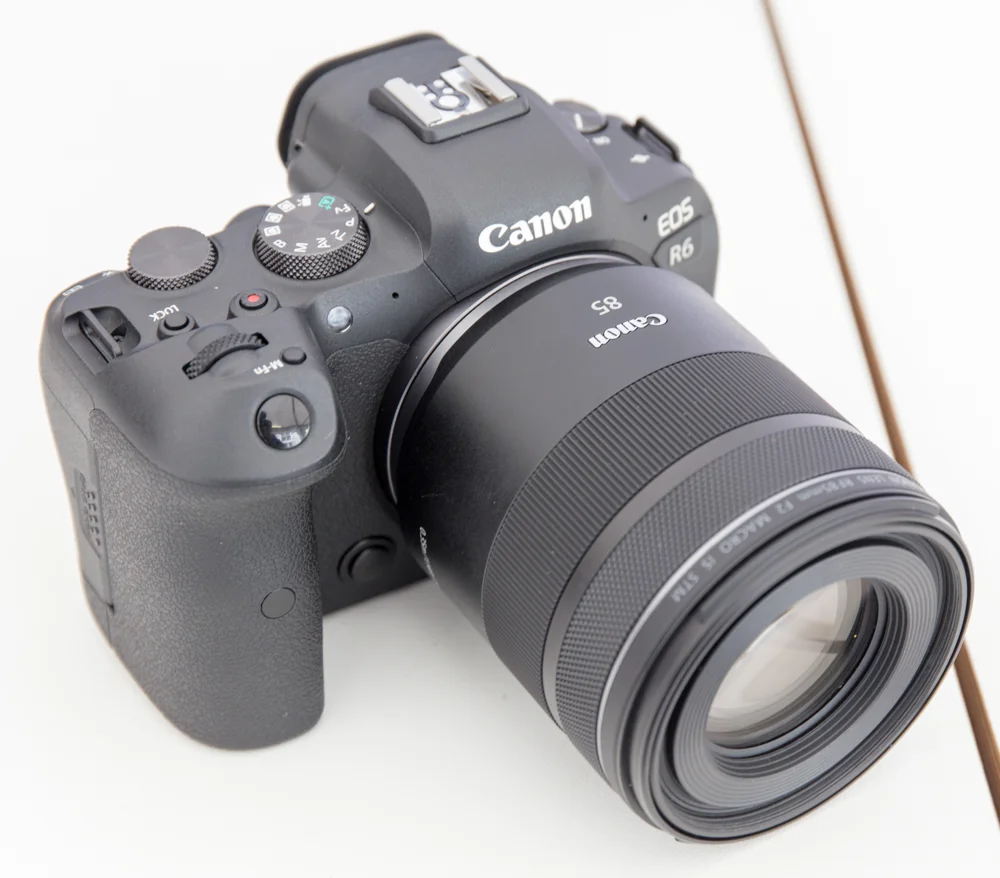

For full-frame Canon RF portraits, start with the Canon RF85mm F2 Macro IS STM unless you specifically need the wider f/1.2 aperture. Nikon Z owners should start with the Nikon NIKKOR Z 85mm f/1.8 S; Sony E owners can compare the Sony FE 85mm F1.4 GM II SEL85F14GM2 with the Sigma 85mm F1.4 DG DN Art Sony E. There is no cross-mount winner. A lens that cannot attach to your camera is not a recommendation.
The bigger decision is often 50mm versus 85mm versus 135mm, not which badge is on the barrel. An 85mm prime suits individual portraits when you have room to step back. The Nikon 50mm is the more useful option here for wider framing in a small room. The Sony 135mm belongs in a different job, such as a headshot session with space between the camera and subject. Buying the longest or fastest lens first can make ordinary family photographs harder to compose.
These recommendations draw on manufacturer specifications and independent reviews. Some reviews were available only as excerpts.
We may earn a commission from qualifying purchases through the Amazon.com links. They open exact-model searches, not verified listings. Check mount, generation, condition, accessories, seller authorization, regional warranty and delivery to your address. Current prices and stock are unverified, and Amazon.com may not deliver to every country.
For a closer look within a system, read the Canon RF portrait lens guide or Nikon Z portrait lens guide. Neither mount fits a Sony E body. If you are choosing a camera as well, use the portrait camera guide separately.
Compare the seven picks
| Exact product and affiliate search | Native mount and coverage | Focal length | Maximum aperture | Best-fit job |
|---|---|---|---|---|
| Canon RF85mm F2 Macro IS STM | Canon RF, full frame | 85mm | f/2 | Canon RF starting point |
| Canon RF85mm F1.2 L USM | Canon RF, full frame | 85mm | f/1.2 | Canon wider-aperture option |
| Nikon NIKKOR Z 85mm f/1.8 S | Nikon Z, full frame FX | 85mm | f/1.8 | Nikon Z starting point |
| Sony FE 85mm F1.4 GM II SEL85F14GM2 | Sony E, full frame FE | 85mm | f/1.4 | Sony branded fast 85mm |
| Sigma 85mm F1.4 DG DN Art Sony E | Sony E, full frame FE | 85mm | f/1.4 | Sony E alternative fast 85mm |
| Sony FE 135mm F1.8 GM SEL135F18GM | Sony E, full frame FE | 135mm | f/1.8 | Sony longer-distance portraits |
| Nikon NIKKOR Z 50mm f/1.8 S | Nikon Z, full frame FX | 50mm | f/1.8 | Nikon wider portrait framing |
Check your mount and sensor first
Canon RF lenses cover full frame and give a narrower view on RF APS-C. They do not fit EF DSLRs or EOS M. EF-to-RF adapters do not work in reverse.
Nikon Z lenses cover FX and give a narrower view on Z DX. They are not F DSLR lenses. FTZ does not adapt Z lenses to F bodies.
Sony E entries cover FE full frame and give a narrower view on E APS-C. A-mount is excluded. Sigma entries are Sony E DG DN, not L-Mount or DG HSM.
No adapted use or teleconverter combination is verified. Physical focal length and f-number do not become sensor-equivalent values. Native fit is not an exhaustive body or firmware approval.
Which lens fits your job?
1. Canon RF85mm F2 Macro IS STM
Choose this for posed individuals and occasional close details rather than buying a separate close-focus lens immediately. Its half life-size capability is useful, but does not turn it into a true macro lens. Stay with it if f/2 gives enough separation for your photographs.
Canon specifies 0.5x maximum magnification, so a subject appears half life-size on the sensor rather than the full life-size of 1:1 macro. Photo Review notes that the lens has no weather sealing. Plan around that if your portrait sessions move outdoors.
2. Canon RF85mm F1.2 L USM
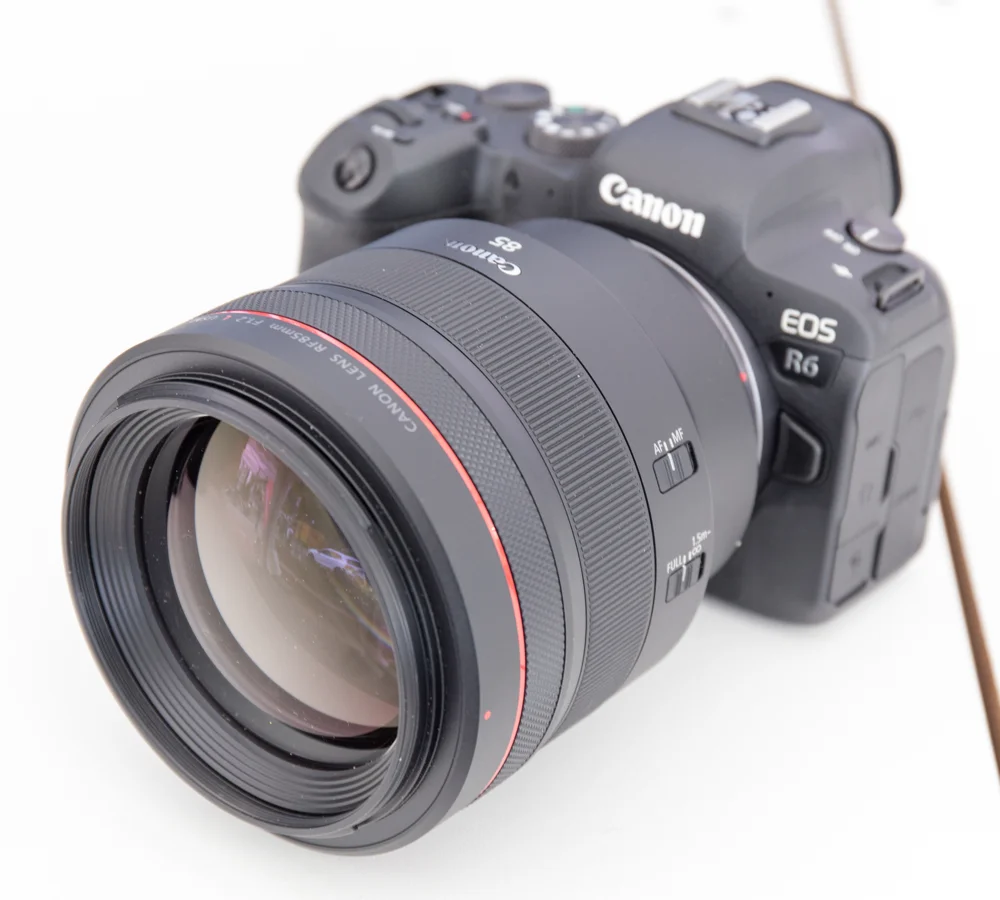

Choose this when the f/1.2 aperture is a deliberate part of your portrait style. It is not the automatic upgrade for everyone. The documented weight and lack of optical stabilization make the smaller f/2 lens a more sensible starting point for some handheld sessions.
Canon lists a weight of 1195g and no optical image stabilization, which compensates for camera shake inside the lens. The large, heavy build is a reason to handle it before committing. This recommendation is for the non-DS version.
3. Nikon NIKKOR Z 85mm f/1.8 S
Product photo loads from Amazon when available.
This is the Nikon lane for individual portraits without making f/1.2 the priority. The 85mm view still needs room, particularly on a DX body. Before buying, try framing a waist-up subject at 85mm with an existing zoom and check whether you can step back.
Its f/1.8 maximum aperture admits less light than the Z85mm f/1.2. The more immediate limit may be space: fixed 85mm framing can be restrictive indoors, especially on DX. A wider opening will not solve a composition that is too tight.
4. Sony FE 85mm F1.4 GM II SEL85F14GM2
Product photo loads from Amazon when available.
Pick the exact GM II when a Sony-branded f/1.4 portrait prime matches the brief. The aperture is the reason to consider it over a slower option, not proof that every photograph improves. Verify the model code rather than accepting a first-generation GM listing.
Fixed 85mm framing still needs room. The Digital Picture describes it as not inexpensive, but that review assessment is not a current price quote. Compare today’s cost against how often you will use f/1.4.
5. Sigma 85mm F1.4 DG DN Art Sony E
Product photo loads from Amazon when available.
This is a same-mount alternative to the Sony 85mm, not a cheaper universal fit. Choose it if f/1.4 and fixed portrait framing matter more than focus-distance markings. Account for the documented distortion in your editing workflow before assuming uncorrected files are ready to deliver.
Amateur Photographer reports pincushion distortion, which bends straight edges inward, and no focus-distance markings. Check correction support if your background includes straight lines. The missing markings matter if you plan manual-focus positions.
6. Sony FE 135mm F1.8 GM SEL135F18GM
Product photo loads from Amazon when available.
Choose 135mm when the session gives you room and you want tight framing from farther away. It is a poor first purchase for cramped living rooms. No focal length creates flattering perspective by itself; camera position and the distance to the subject still control the result.
The f/1.8 maximum aperture gives you a wide opening at this longer focal length. The Digital Picture lists moderately heavy construction and no aperture-ring lock as drawbacks. Include handling in the decision, not just the view through the lens.
7. Nikon NIKKOR Z 50mm f/1.8 S
Product photo loads from Amazon when available.
The 50mm is the choice for more of the person and surroundings in the frame. It also gives Nikon owners an alternative when an 85mm would force them against a wall. Avoid moving too close for tight faces merely because the lens allows a wider view.
You get a wider view than the 85mm on the same Nikon Z body, with an f/1.8 maximum aperture. Digital Camera World describes it as bigger and heavier than the F-mount AF-S50mm f/1.8G. If you are moving from that DSLR lens, do not expect the same size in your bag.
Buying criteria
Match the portrait to the space
List the photographs you actually need. Tight headshots, seated couples and full-length family groups do not demand the same view. Start with the room or location where you work most often. A long prime may fit an outdoor session but be unusable in the room where you photograph children. If you already own a zoom, set it to the candidate focal length and leave it there for a practice session. That answers a framing question without pretending to test the candidate lens.
Spend on aperture only when you need it
A wider maximum aperture can help with exposure and shallow depth of field. It also makes focus placement less forgiving. For two people at different distances, stopping down may be the better choice even with an f/1.2 lens. Do not pay for a wide aperture on the assumption that every portrait should use it. Background distance and lighting can matter more than opening the lens another stop.
Separate close detail from face framing
The Canon RF85mm F2 reaches 0.5x magnification, not 1:1. That is a useful extra for details, but the reason to buy it here is portrait framing. The Sony 135mm has a different purpose. Do not compare these options as though every extra capability solves the same problem. Consider whether you need a single lens for a mixed session or a dedicated lens for one repeatable setup.
Check the crop before placing the order
All seven cover their respective full-frame systems. Compatible APS-C bodies use a narrower view, so the same 85mm lens becomes harder to use for groups in a confined space. Aperture markings do not change when you attach a lens to a crop body. Use your body and desired composition to decide, rather than treating physical focal length as a universal portrait label.
Frequently asked questions
Is 85mm always better than 50mm for portraits?
No. An 85mm can suit individual framing with room to step back. A 50mm is often easier for full-length pictures or environmental portraits in limited space. Choose camera distance and composition first, rather than treating one focal length as a quality ranking.
Can these lenses fit a Canon or Nikon DSLR?
No native DSLR fit is recommended. The Canon entries are RF and the Nikon entries are Z. An EF-to-RF adapter or Nikon FTZ does not work in reverse to make these mirrorless lenses DSLR lenses. Sony and Sigma entries here are Sony E.
Does a faster aperture guarantee better portraits?
No. It gives another exposure and depth-of-field option. Missed focus, an awkward camera position or unsuitable light can outweigh it. A group may need a smaller aperture than a single-person portrait, regardless of what the lens can open to.
Which pick should I buy first?
Buy within your mount. Start with the Canon RF85mm F2 or Nikon Z85mm f/1.8 for individual portraits. Sony owners seeking f/1.4 should compare the GM II and Sigma E variant. Choose the Nikon 50mm or Sony 135mm when their framing solves your particular space problem.
Sources and specifications
- Canon RF85mm F2: Canon specifications, Photo Review review.
- Canon RF85mm F1.2 non-DS: Canon specifications, DPReview review.
- Nikon Z85mm f/1.8: Nikon specifications, Amateur Photographer review.
- Sony 85mm GM II: Sony specifications, The Digital Picture review.
- Sigma 85mm Sony E: Sigma specifications, Amateur Photographer review.
- Sony 135mm GM: Sony specifications, The Digital Picture review.
- Nikon Z50mm f/1.8: Nikon specifications, Digital Camera World review.
Related guides
Best lens for wildlife photography
Compare seven Canon RF, Sony E and Nikon Z wildlife lenses by subject distance, daylight aperture, carrying demands and sourced drawbacks. Mounts are separate choices.
Best lens for wedding photography
Compare seven Canon RF, Nikon Z and Sony E wedding lenses for general coverage, distant ceremonies and environmental portraits.
Best lens for macro photography
Compare seven native-mount macro lenses reaching at least 1:1, with sensor coverage, stabilization caveats and body-specific focus-stacking limits.